Context
The design and build approach prioritised reduction, clarity and structural consistency. Every interface decision was evaluated against the question of whether it supported the work or distracted from it. The resulting site uses a simple visual language, neutral typography and a limited colour palette, creating a quiet framework in which the artwork and accompanying texts are given space to breathe.
A key challenge was accommodating extensive bilingual contextual writing without resorting to overlays or pop-up interfaces, which the artist explicitly wished to avoid. This was resolved through a vertically scrolling page structure in which imagery sits on one side of the layout and text on the other. French and English translations are distinguished through subtle variations in dark grey tones, allowing both languages to coexist clearly without visual competition.
The site was built using a content management system to support a large and evolving catalogue of work. While the overall structure remains consistent, the system allows for significant variation in content types, including still images, video, text-heavy projects and projects with minimal contextual material.
Arno Bouchard is a contemporary artist working with film, sculpture, performance and photography. His work is symbolic, and often described as 'metaphysical'. Fundamentally, he is concerned with inner truths combatting external challenges. The website was conceived as a primary platform for presenting this body of work in a way that respected its conceptual density. From the outset, Bouchard was clear that the site should remain as minimal as possible, avoiding decorative or attention-seeking interface elements. Animations, carousels, pop-up lightboxes and expressive typography were intentionally excluded in order to allow the work itself to remain the focus. Alongside the visual material, contextual writing plays a significant role within each project. The site therefore needed to support a large volume of text while remaining visually restrained. It also needed to function bilingually, presenting French and English translations simultaneously, without relying on language selectors or page duplication.
Design & Build Overview
The design and build approach prioritised reduction, clarity and structural consistency. Every interface decision was evaluated against the question of whether it supported the work or distracted from it. The resulting site uses a simple visual language, neutral typography and a limited colour palette, creating a quiet framework in which the artwork and accompanying texts are given space to breathe. A key challenge was accommodating extensive bilingual contextual writing without resorting to overlays or pop-up interfaces, which the artist explicitly wished to avoid. This was resolved through a vertically scrolling page structure in which imagery sits on one side of the layout and text on the other. French and English translations are distinguished through subtle variations in dark grey tones, allowing both languages to coexist clearly without visual competition. The site was built using a content management system to support a large and evolving catalogue of work. While the overall structure remains consistent, the system allows for significant variation in content types, including still images, video, text-heavy projects and projects with minimal contextual material.
Arno Bouchard
Website Design & Development UX / UI
CMS (content management system) Development
Album cover photograph by Yusaku Aoki.
Campaign videography by Rinko Tsukamoto.
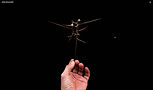
The home page functions as a deliberately restrained landing page rather than a content-heavy introduction. It presents a single full-screen image, allowing the work to immediately occupy the browser window without distraction. Navigation is limited to a discreet menu positioned in the top corner, reinforcing the site’s overall emphasis on reduction and focus.

This initial screen establishes tone rather than context, inviting the viewer to enter the work intuitively rather than through explanatory framing. By removing supplementary content from the landing page, the site avoids directing interpretation and instead allows the audience to engage with the work on its own terms from the outset.

From the landing page, navigation unfolds through a structured project menu system. A master menu presents the main project categories, each represented by a thumbnail image, providing an overview of the artist’s practice. Each category then opens into its own independent menu, allowing users to navigate laterally between projects while retaining a clear sense of position within the broader catalogue.

Dark Reponsive Menu

Light Reponsive Menu

Privacy Notice

Hidden Social Media Link


Given the breadth of Bouchard’s practice, one of the core challenges was maintaining consistency across projects that did not share the same types or quantities of content. Some projects consist solely of film, others combine photography and video, while some rely heavily on extended text. A flexible but controlled solution was required.


A master project page template was developed, driven by a CMS that pulls content from multiple databases. Custom code was written to allow individual sections of the template to collapse or expand depending on the assets available for each project. This prevents empty or redundant areas from appearing on pages where certain elements are not required, while preserving a consistent visual structure across the site.

Imagery and video within project pages can be clicked into full-screen mode, allowing close engagement with the work without introducing disruptive interface elements. On mobile and tablet devices, the layout adapts from a side-by-side structure to a vertical flow, with imagery and text cascading naturally down the page to maintain legibility and balance across screen sizes.


The journal section is visually distinguished from the project pages through the use of a dark background, signalling a shift away from finished works toward reflection, process and ongoing thought. Individual journals are represented using Chinese Hexagram (I Ching) icons, each chosen to align with the conceptual tone of the journal, reinforcing the symbolic framework that runs throughout the site.


The biography and interview sections share the same dark visual treatment as the journal pages, separating contextual and discursive material from the presentation of the artworks themselves. This distinction reinforces the conceptual structure of the site, positioning these sections as spaces for reflection and dialogue rather than documentation. A vector rendering of the artist’s fingerprint is used discreetly within this area as a hidden link to his Instagram account, continuing the site’s use of personal symbolism in a restrained and non-obvious way.